
Fields That Identify the Green County Owner of Record
Ascent is the county's ownership, assessment, and tax system. It supports a search by owner name. The live parcel card is not publicly viewable, so confirm the exact field labels on screen. Use the fields as a checklist. A tax-roll owner name is current only to that roll's update. It may not reflect the latest transfer. The recorded deed supplies the vesting and legal description that confirm the present Green County owner of record.
| Owner name | Tax-roll name, if displayed; compare it with the deed grantee |
|---|---|
| Vesting | Read the deed for joint, trust, entity, or estate language |
| Mailing address | Tax-bill destination; it may differ from the situs |
| Situs address | Physical parcel location |
| Parcel and legal description | Cross-reference for the same land in GIS and Tapestry |
| Deed reference | Recording number or book/page, if the index shows one |
The owner of record is not always the occupant. A mailing address just tells the Treasurer where tax notices go. It may belong to a PO box, lender, trustee, or estate representative rather than to anyone living on the parcel.
Confirm the Present Green County Owner in the Deed
Start with the tax-roll name. Then confirm the latest recorded conveyance in Tapestry. The Register of Deeds is the legal custodian of Green County deed records. The county's static pages publish no index cutoff or live field list. Search the owner as grantee. Compare the parcel's legal description, recording date, and grantor against the roll. If the deed names a trustee or estate representative, read the full instrument to understand the role. A recorded change can precede the roll update. Green County publishes no standard delay figure.
- Identify the parcel and current roll name in Ascent.
- Search Tapestry for the latest deed with that party as grantee.
- Compare legal description and vesting, not the name alone.
- Use Wisconsin DFI to clarify a company name when the instrument names an entity.
- Owner of record
- The party named in the current public tax or deed record.
- Vesting
- The way the deed states that title is held.
- Registered agent
- A contact listed for a business entity, not proof of parcel ownership.
Use Green County Mailing Data With Care
Tax bills need a destination. That is why the Green County tax roll carries a mailing address, which may point to a servicer, trust, representative, or second home. Use it only for a legitimate property matter. Wisconsin's Safe at Home program gives eligible participants a substitute address, and other protected details can be withheld. A missing street address never justifies combining records to identify a protected person. Respect that boundary.
Lawful use. Keep owner information to property research, civic questions, and appropriate correspondence. Never use it to stalk, threaten, or harass a person.
Green County's Owner Roll Is a Dated Snapshot
The Ascent result reflects the assessment and tax system, not a live closing feed. Green County states no refresh schedule. No average delay after recording is published either. Check Tapestry for the latest grantee deed. Match the legal description to the same land. The current roll still supplies the owner name and tax destination. Note its assessment year against the recorder's recording date.
Never cite a specific delay the county has not published. A transfer may also involve a parent tract, a new parcel number, or an estate instrument. If the roll and deed differ, ask the Treasurer whether a tax-roll update is pending. Ask the Register of Deeds whether another document follows the deed.
Separate the Green County Situs From Tax Mail
The situs is where the property sits. The mailing address is where tax notices go. Green County records may direct bills to a PO box, a lender or servicer, a trustee, an estate representative, or an owner's other home. That explains a name and street address that seem not to match. Compare the situs, parcel number, and legal description before calling the card wrong. A changed mailing address is a tax-account matter for the Treasurer. A title-name change is different. It requires a new legal instrument recorded with a Real Estate Transfer Return.
Treat the mailing address as correspondence information only. It says nothing about who occupies the building.
Green County Deeds Show How an Entity Holds Title
An LLC, trust, or estate can sit on the roll under a name unlike the people who manage it. The deed shows the grantee and vesting language. Wisconsin DFI can clarify a corporation or LLC's legal name and registered agent. That record proves no parcel ownership. A trust may appear under its trustee, the trust name, or both. A personal representative can convey estate property. Survivorship wording can shift today's interest holder. Read the instrument instead of forcing every line into one person's name.
Older transfers need a longer view. The Green County former-owner chain traces grantees backward through prior Green County deed records.
Green County Property Fraud Alert Monitors a Name
Green County residents can enroll in a no-cost Property Fraud Alert service. It runs through the Register of Deeds. The service watches a name. When a document records under that name, the service sends notice. It cannot block a filing, verify title, or substitute for reading the recorded instrument itself. If an alert arrives, compare the party names and recording reference against Tapestry. Then call the Register of Deeds at the number listed on its county page. The recorder judges whether a presented document meets statutory recording criteria. But the office gives no legal advice and never changes an existing deed. Green County's alert service explains the name-based notification in more detail.
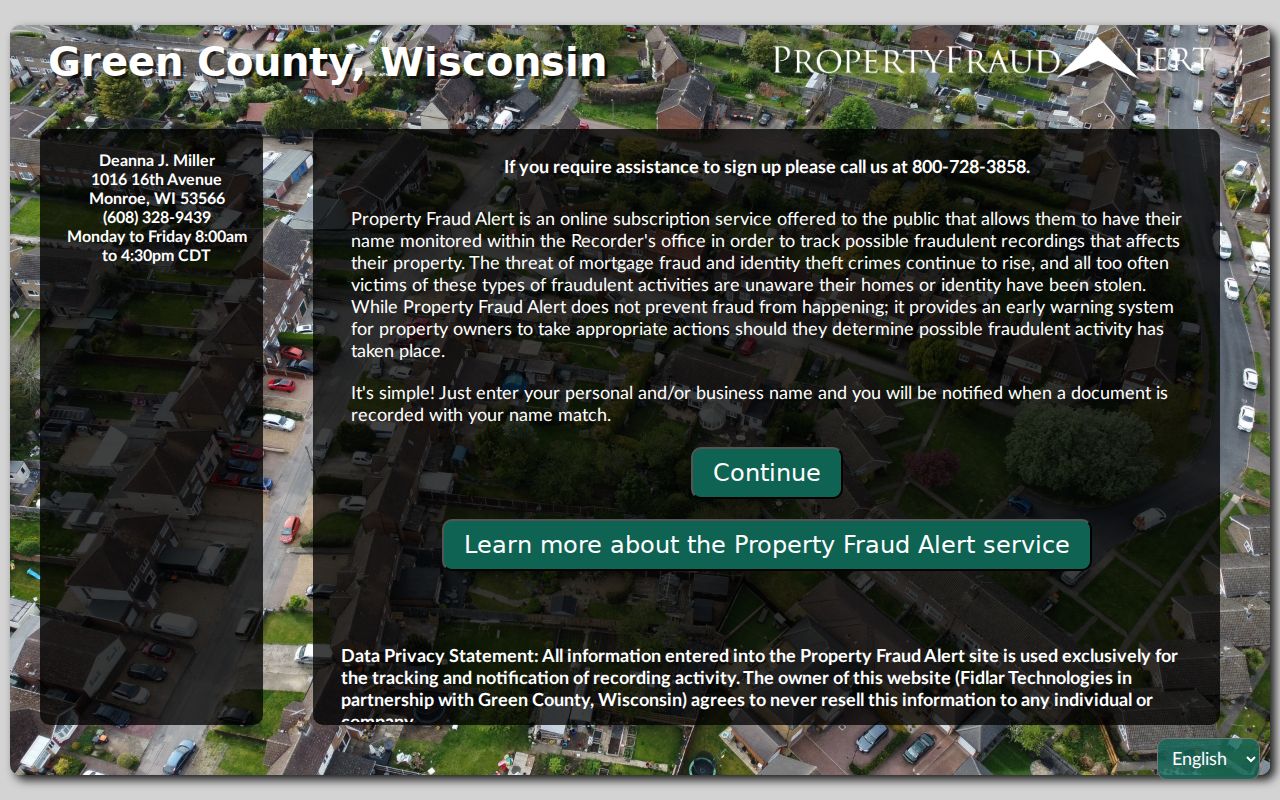
A notice may prompt a closer look, but the recorded document itself remains the record to inspect.
Ask Green County to Confirm a Missing Owner Record
When the online record shows no recent change, contact the Register of Deeds with the parcel number, grantor and grantee names, legal description, and an approximate recording date. Ask whether the newest instrument is indexed yet. Ask whether an image or copy exists. For tax-roll names, parcel splits, mailing addresses, or bills, contact the Treasurer at the courthouse. The county says at least 15 years of property information is public, though that statement covers the Treasurer's property information and does not set the deed-index cutoff. Check the current Register of Deeds fee schedule for real-estate copies. The separate $20 first vital-record copy fee is not a deed fee.
A Green County Owner Result Is a Record Snapshot
An online owner line reflects whatever one county system held when it was last updated. It also reflects the purpose that system serves. Ascent serves as the ownership, assessment, and tax route. No exact refresh schedule or card labels are published, though. A newly recorded deed may hit the Register of Deeds index before it shows in a tax-facing result. Note: record the date you checked, the source name, and any displayed tax year.
Before treating two entries as the same parcel, compare at least three details: APN, situs, and legal description. Street addresses get reassigned. Rural parcels may use route or highway names, and a subdivision's lot numbers can resemble nearby streets. If one field conflicts, use GIS to find the parcel shape. Then request the underlying deed or assessment record rather than trusting a name match.
The owner of record may be one person, several co-owners, a trust, an estate, or a business entity. A spouse or relative who receives the mail is not automatically an owner. An LLC filing does not prove control of its property. Read the deed's vesting clause and the tax record's owner field separately. For a formal title question, bring in a title professional or attorney. Have them review the full chain, any liens, and court orders.
When the latest transaction resists a search, request a recorded-document search using both parties' names. Include the approximate recording date, parcel number, and full legal description. For a bill or current roll entry, ask the Treasurer what date the record covers. Keep the parcel and tax year attached to every answer. That habit keeps an old value or prior owner from masquerading as a current result.